Foundation Drainage
Foundation drainage systems
Foundation drainage exists to do one thing: collect water in the soil around a house and carry it away before it can build pressure against walls and footings. When that path works, basements tend to stay dry; when it is blocked, undersized, or missing, water finds another route inside.

Exterior drainage: weeping tile
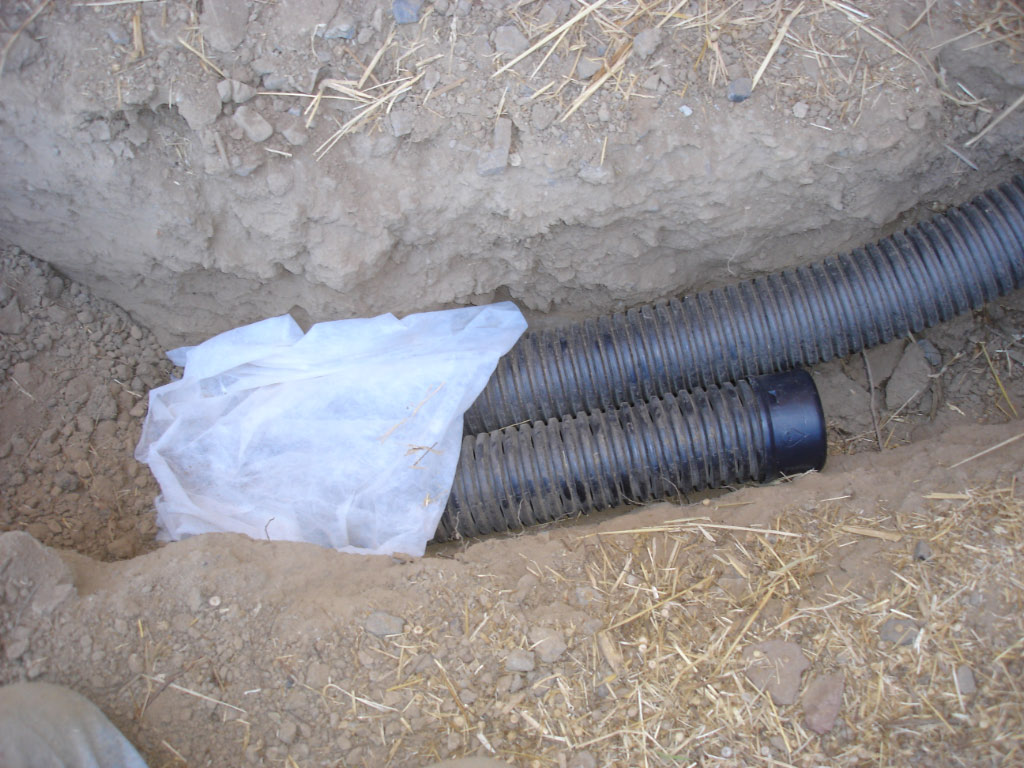
The most common subsurface system is the exterior perimeter drain, widely called weeping tile in Canada. It is a perforated pipe laid in gravel alongside the footing at the base of the foundation. Water in the surrounding soil enters the pipe through its openings and flows by gravity toward a discharge point, a storm connection where permitted, or a sump pit.
For the pipe to work, the gravel envelope must stay open. Fine soil migrating into the gravel can clog it over time, which is why a filter fabric is often placed around the gravel. Where the pipe drains to a sump rather than by gravity, the drain and the pump function as one system.
What the trench usually contains
- A perforated pipe set at or slightly below footing level.
- Clean, coarse gravel surrounding the pipe to let water move freely.
- Filter fabric separating gravel from native soil to limit silting.
- A consistent slope toward the discharge point or sump.
Surface drainage and grading
Much of the water that reaches a foundation never needed to. Surface drainage handles rain and meltwater before it soaks in. The two main controls are grading and roof runoff.
Grading refers to the slope of the soil next to the house. Ground that slopes away from the walls moves water outward; ground that has settled into a dip directs it toward the foundation. Roof runoff matters just as much: a downspout that ends right at the wall concentrates a large volume of water exactly where it should not go, while an extension carries it well past the backfill zone.
Backfill settles
Soil disturbed during construction is looser than undisturbed ground and continues to compact for years. A slope that drained well when a house was new can flatten or reverse as backfill settles, which is one reason grading is worth rechecking periodically.
Exterior versus interior approaches
Drainage can be addressed from outside or inside. The two are not interchangeable, and each has trade-offs.
| Aspect | Exterior perimeter drain | Interior perimeter drain |
|---|---|---|
| Where water is intercepted | In the soil outside the wall | Inside, at the footing edge |
| Typical access | Excavation around the foundation | Channel cut along the basement floor |
| Disruption | Landscaping and exterior work | Interior floor work |
| Common pairing | Gravity discharge or sump | Sump pit and pump |
Seasonal load in Canada
Drainage systems in Canada face an uneven year. A rapid spring thaw can release a large amount of water while the ground below is still frozen and cannot absorb it, sending much of it toward the foundation at once. Summer storms add short, intense bursts. A system sized only for average rainfall may struggle during these peaks, which is part of why a working sump and a clear discharge route matter most in spring.
Signs the drainage path is failing
- Water pooling against the foundation after rain or snowmelt.
- Damp patches low on basement walls, near the floor-wall joint.
- A sump that runs constantly or that never runs despite obvious wet conditions.
- Efflorescence, the chalky white mineral residue left as water moves through concrete.